
Identity
Branding & Graphic Design
We build brand identities and design the things that carry them — logos, color, typography, print, signage, packaging, and the guidelines that keep it all consistent. Identity systems, not just logo files.
What we design
- Brand identity systems.
- Logo and its variants, color palette, typography, imagery direction, and the rules for using them. The complete set, not a single file.
- Logos and marks.
- Primary logo, secondary marks, icons, and favicons, supplied in every format you'll actually need — print, web, embroidery, signage.
- Brand guidelines.
- A document your team, your printer, and your next agency can all follow, so the brand survives contact with other people.
- Print and collateral.
- Business cards, brochures, one-pagers, forms, letterhead, menus, direct mail.
- Signage and vehicle wraps.
- Storefront signage, window graphics, and vehicle wrap design, supplied to your fabricator's specifications.
- Packaging.
- Labels, boxes, and product packaging, set up correctly for print with the dielines and bleeds your printer needs.
- Digital assets.
- Social templates, email headers, presentation decks, ad creative.
A logo is not a brand
You can get a logo for fifty dollars in an afternoon. Plenty of businesses do, and for some of them it's the right call.
What you can't get that way is a system — the answer to what your colors are in CMYK for the printer, what typeface goes on the van, what the logo does when it's half an inch wide, what your photography should look like, and what the brand sounds like when someone writes an email as the company.
Without those answers, every new piece is improvised. Your business cards don't match your website, your signage uses a slightly different blue, and after two years nothing looks like it came from the same organization. That inconsistency is what makes a competent business look smaller than it is.
What you get from us: the logo, yes — plus the palette, the type system, the usage rules, the file formats, and a guidelines document. Everything in editable source files that you own outright.
Rebranding and brand refresh
Most of the branding work we do isn't for new businesses. It's for established ones whose identity stopped fitting.
A brand refresh keeps what people recognize and modernizes the execution — cleaner logo, updated palette, better typography, consistent application. Lower risk, lower cost, and usually the right answer.
A full rebrand replaces the identity, and sometimes the name. Higher risk and considerably more work, because everything downstream changes: website, signage, vehicles, print, social, email, legal documents.
Which one you need usually comes down to a single question: is there brand equity worth keeping? If customers recognize you and think well of you, refresh. If the name or identity is actively working against you — it's confusing, it's dated in a way that costs you credibility, it doesn't describe what you now do, or it's tied to a reputation you've outgrown — rebrand.
We'll tell you which one we think you need, including when the answer is “neither, your brand is fine, spend the money on SEO instead.”
What a rebrand actually involves
The design is the visible part and the smaller part. The rest:
- An asset audit — every place your current brand appears. Businesses routinely find sixty or seventy touchpoints they'd forgotten.
- A rollout plan — what changes on day one, what changes as stock runs out
- Communication — customers need to be told, or they think you closed
Website changes are where rebrands most often damage search rankings, if URLs or content get changed carelessly. We handle that alongside web design and SEO, so the rebrand doesn't cost you traffic.
Ongoing graphic design
Some clients need a brand built once. Others need design continuously — social graphics, ads, flyers, seasonal collateral, a new one-pager every fortnight.
We do both. Ongoing design runs as a monthly retainer: you request what you need, we produce it in your brand, turnaround is X business days.
It's usually cheaper than a part-time designer and considerably faster than briefing a new freelancer each time — because we already hold your brand system and don't have to be re-explained it.
Print, signage and fabrication
Design that's going to be physically made has requirements that screen design doesn't: bleeds, color profiles, dielines, minimum sizes, substrate considerations, and vinyl cut paths.
We supply print-ready files to your printer's or fabricator's spec, in the format they asked for. If you don't have a supplier, we can recommend one.
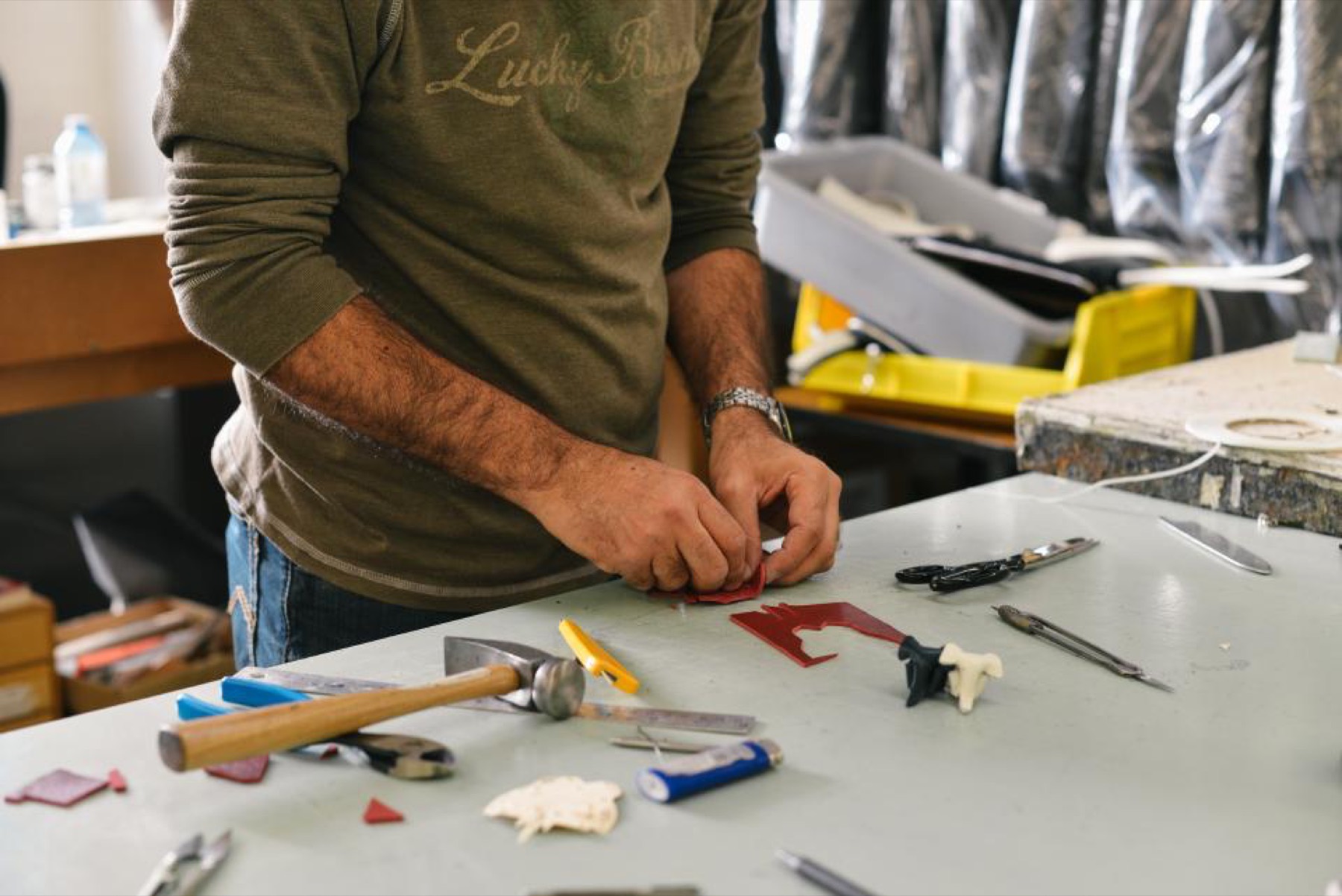
Design stops being theoretical the moment something gets cut
A colour that looked right on a screen is a different colour on vinyl. A logo that reads beautifully at full width disappears at half an inch on a van door. Type that has plenty of air in a browser closes up when it is printed at 300dpi on uncoated stock.
This is the part of the work that is unglamorous and completely unforgiving, and it is the reason the deliverable is a system rather than a picture. Every one of those questions has to already have an answer before the file reaches a fabricator.
Our process
- 1Discovery. Who you are, who you serve, what you want to be understood as, and who you're competing against visually.
- 2Direction. Two or three distinct concepts — genuinely different, not the same idea in three colors. You pick a direction.
- 3Refinement. We develop the chosen direction through a set number of revision rounds.
- 4System build. Palette, typography, secondary marks, application examples.
- 5Guidelines and handoff. The guidelines document, plus every file format you'll need, in editable source.
- 6Rollout support. Applying the new identity across web, print, social, and signage.
You own everything
Full ownership of the final design, transferred to you, with editable source files.
Worth checking with any designer you hire. It's common to receive flattened JPGs and PDFs and discover you can't edit anything without going back to the person who made it — which is a business risk, not just an inconvenience.
What branding costs
| Project | Range |
|---|---|
| Logo only | from $500 |
| Brand identity system (logo, color, type, guidelines) | from $2,500 |
| Brand refresh | $X |
| Full rebrand | $X |
| Print collateral | $X per piece |
| Vehicle wrap design | $X |
| Packaging design | $X |
| Ongoing design retainer | $X/mo |
What moves the number: how many applications the system has to cover, how many concept directions you want to see, whether it's a new brand or a rebrand with existing assets to migrate, and whether print production is included.
Frequently asked questions
- How much does branding cost?
- A logo alone runs $X. A full brand identity system — logo, color, typography, guidelines, and applications — runs $X to $X. A rebrand for an established business costs more because existing assets have to be migrated.
- How much does logo design cost?
- Anywhere from $50 on a marketplace to five figures with a large agency. Ours runs $X to $X. The difference isn't drawing ability — it's whether you get a single file or a system with variants, formats, and usage rules that stays consistent as you grow.
- How much do branding services cost?
- Depends on scope. Logo-only sits at the bottom; a full identity system with print collateral, signage, and guidelines sits at the top. Our ranges are on the pricing page, and we quote fixed project fees rather than hourly.
- How much does a rebrand cost?
- The design is often the smaller cost. Reprinting collateral, replacing signage, re-wrapping vehicles, and updating the website frequently exceed the design fee. We scope the whole rollout up front so the total is visible before you commit, not discovered halfway through.
- What is a rebrand?
- A rebrand is changing how a business presents itself — name, logo, visual identity, messaging, or all four. It differs from a refresh, which modernizes the existing identity while keeping what customers already recognize.
- What does rebrand mean?
- To rebrand means deliberately changing a company's public identity. It can be purely visual — new logo and design — or strategic, changing the name, positioning, and message alongside the visuals.
- Why do companies rebrand?
- Common reasons: the business changed and the brand no longer describes it; a merger or acquisition; the identity looks dated in a way that costs credibility; legal or trademark conflict; expanding beyond the market the name implies; or distancing from a damaged reputation. "We're bored of it" is not one, and it's the most expensive reason to act on.
- How do I rebrand my business?
- Start with why. Audit every place your current brand appears — there will be more than you think. Develop the new identity, then plan the rollout in order of visibility rather than convenience. Tell customers before they notice. Protect your website's search rankings through the change, which is where rebrands most often do lasting damage.
- Should I rebrand or refresh?
- Refresh if customers recognize you and think well of you — keep that equity. Full rebrand if the identity is actively working against you: wrong name for what you now do, confusing, or tied to a reputation you've moved past. If you're unsure, it's usually a refresh.
- How long does branding take?
- A logo and basic system typically takes X to X weeks. A full identity with guidelines and applications takes X to X weeks. A rebrand rollout runs longer, because signage, print, and vehicles change on their own schedules.
- Do I own my logo and brand files?
- Yes — full ownership of the final design, with editable source files. Ask this of anyone you hire. Receiving only flattened JPGs and PDFs is common and it means you can't change anything without going back to the original designer.
- Do you require a contract?
- No minimum term on design work. Projects are quoted with a fixed scope and price, and ongoing design runs as-needed against an agreed plan rather than a locked retainer. Our marketing retainers do carry a three-month minimum, but design isn't one of them.
- Can you match my existing brand?
- Yes. Plenty of our work is producing new material inside an identity that already exists. If you have guidelines we'll follow them; if you don't, we'll document what you have so future work stays consistent.
Let's talk about your brand
Tell us where your brand is falling short and we'll tell you whether it needs a refresh, a rebrand, or nothing at all.